


One Seat, Two Votes: VISSONIC Dual-Delegate Conference Units with E-ink Nameplates for a Major International Institution
Project Background
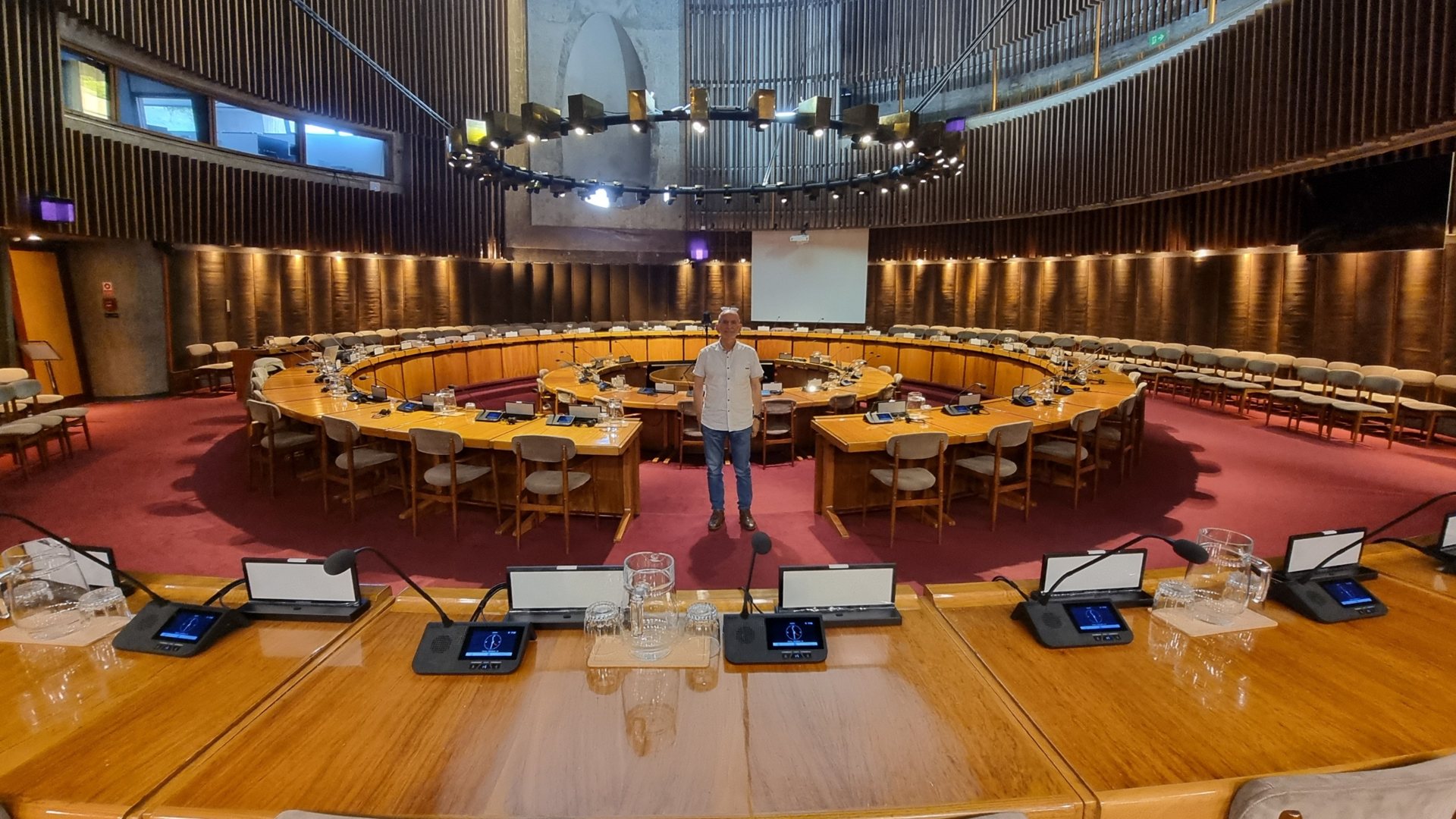
This project is a new build-out of conference-room equipment for a major international institution in Chile. The institution handles multi-party consultations, meeting votes, and multilingual negotiations, with a dense meeting schedule, constantly rotating delegations, and ever-changing participant rosters. Against this backdrop, VISSONIC had to answer two questions at the design stage:
First, nameplates could not depend on “print in advance, place on arrival.”
With meetings running year-round and last-minute delegate or title changes being the norm, nameplates had to be repeatedly reprinted and swapped by hand. The hidden costs had long been underestimated, and the steady consumption of paper ran counter to the institution's environmental principles.
Second, if delegates outnumber seats, voting rights will be squeezed.
Fixed seating does not always match accredited delegate numbers: two members of a delegation sometimes share one device, compressing their legitimate votes into one, and disagreements make it worse. Manual workarounds like show-of-hands counts can take over ten minutes per vote, with disputed results needing recounts and no way to trace votes by individual.
The Solution
VISSONIC's answer was threefold: nameplate content distributed in batches over the network, ready for any change of delegations; conference units that go beyond the basics of speaking and voting to count ballots per person rather than per device; and equipment covering the everyday needs of international meetings, including multilingual simultaneous interpretation and camera tracking of the active speaker.
1. E-ink Nameplates
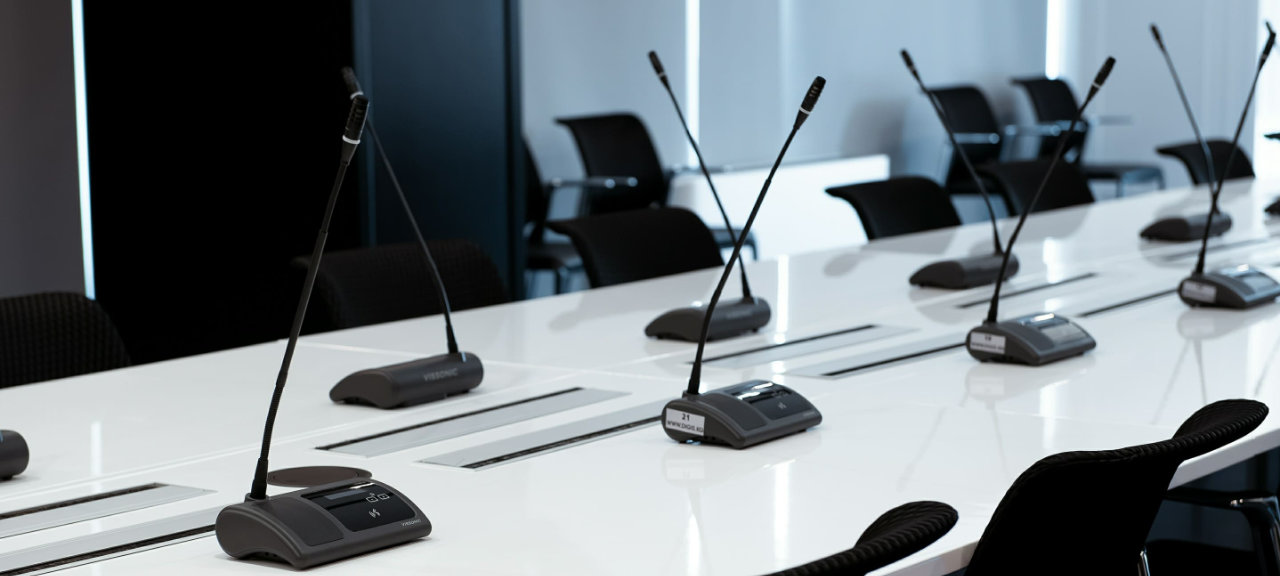
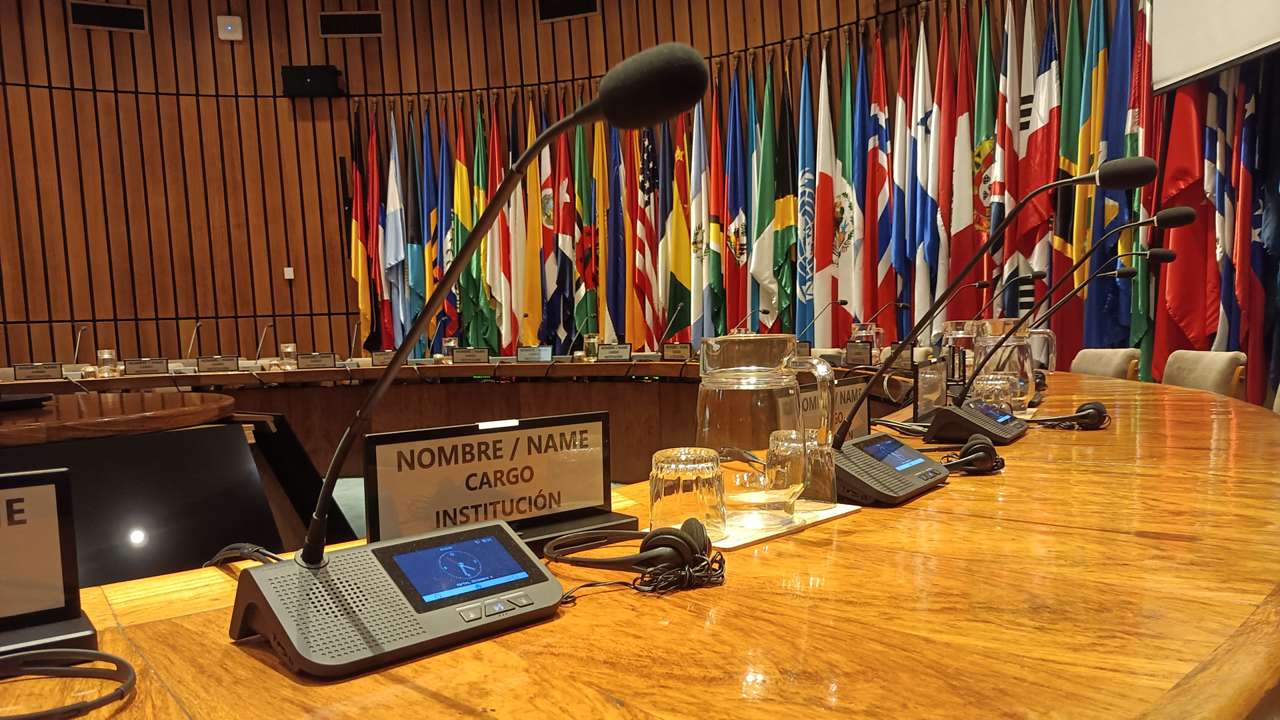
An E-ink nameplate system covers seats across several meeting rooms under centralized management, eliminating printing and manual placement and cutting pre-meeting preparation from hours to minutes:
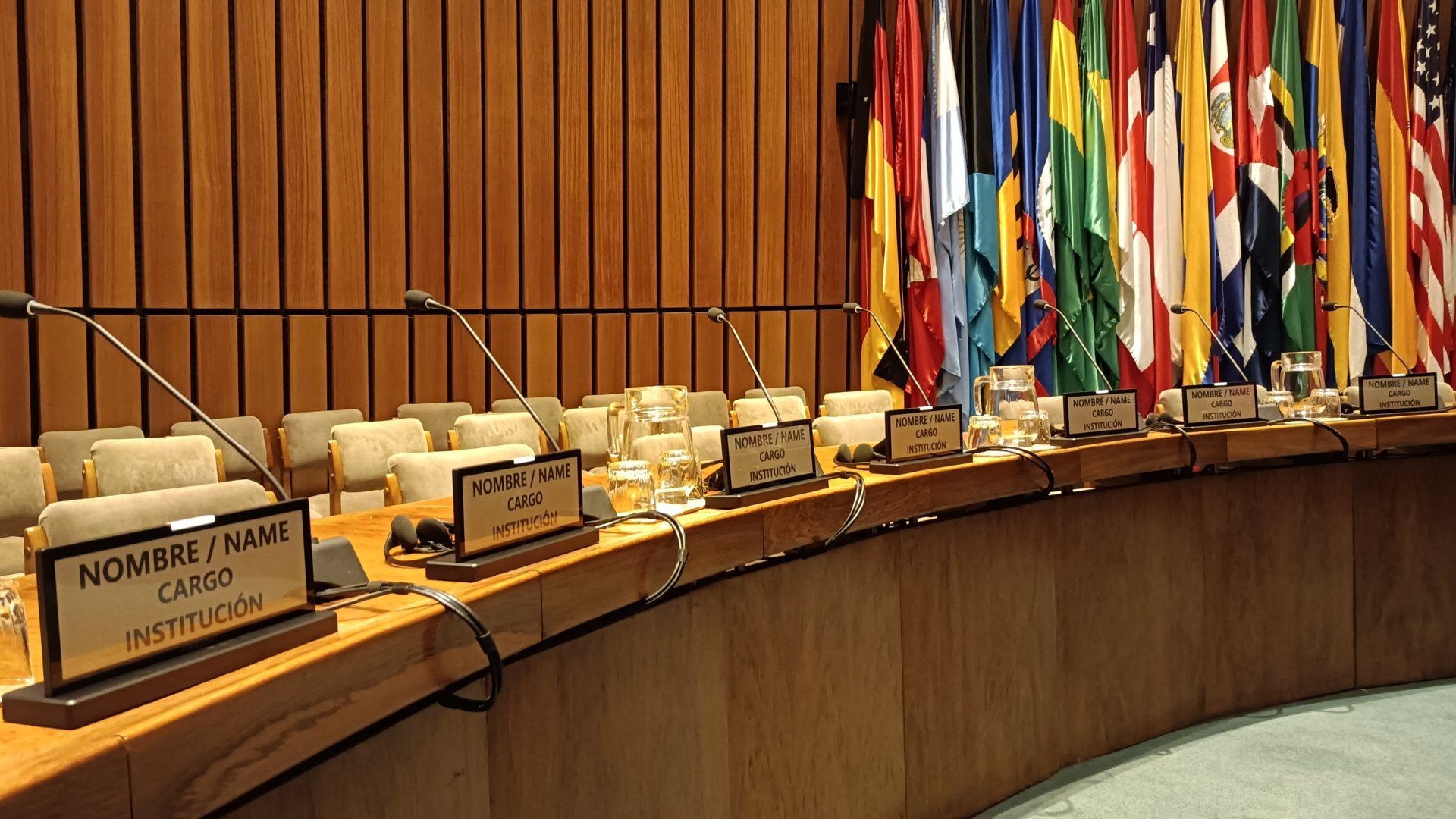
· Fast updates, centralized management: upload the full participant list once through the management system, then refresh by individual room or zone in one batch. Last-minute changes take effect instantly, with no reprinting or manual swapping.
· Near-zero static power draw, content retained through power loss: unlike LCD nameplates, the nameplate uses E-ink technology to deliver a paper-style display while sharply reducing power consumption. Power is drawn only on refresh, so static display across an entire session consumes almost nothing; even an unexpected power cut leaves the content on screen. With no backlight and no flicker, the display suits long sessions and live filming.
· Speaking-status linkage: a dual-color indicator on top of the nameplate mirrors speaking status in real time. Delegates can confirm whether their request to speak has been accepted without looking up, and the vision-mixing team can lock onto the speaker at a glance.
2. Dual-Delegate Conference Discussion System
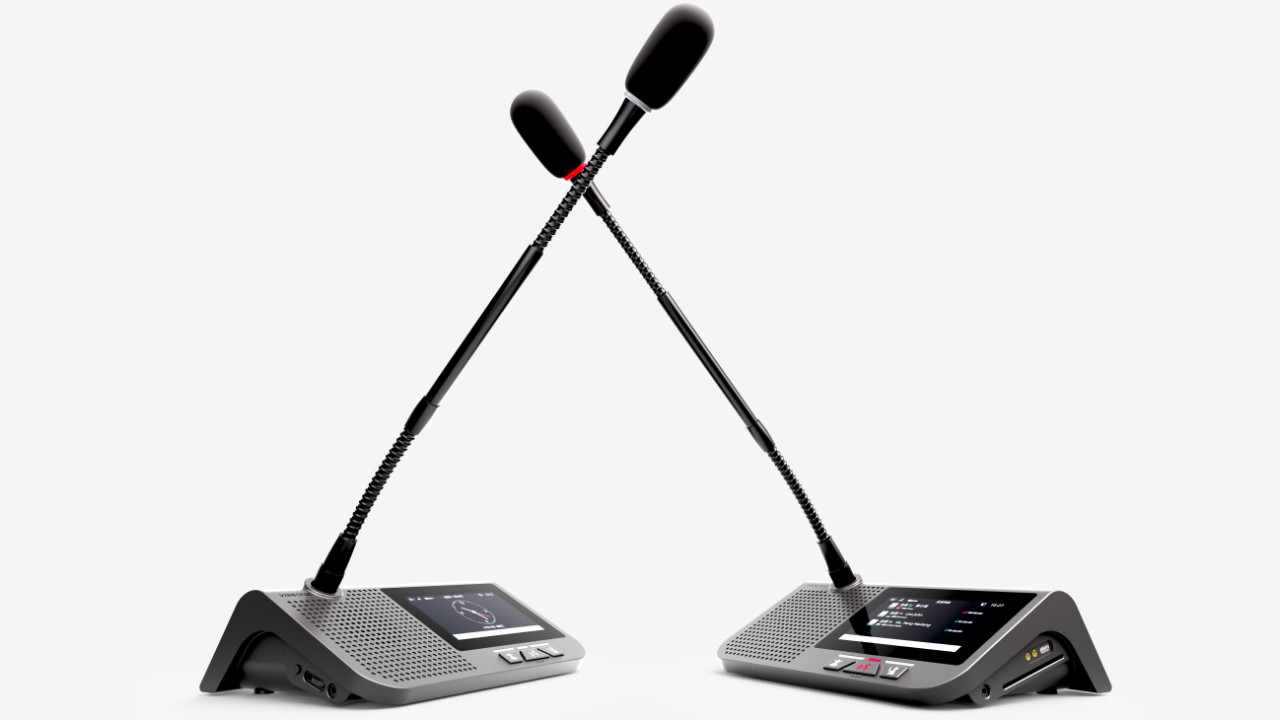
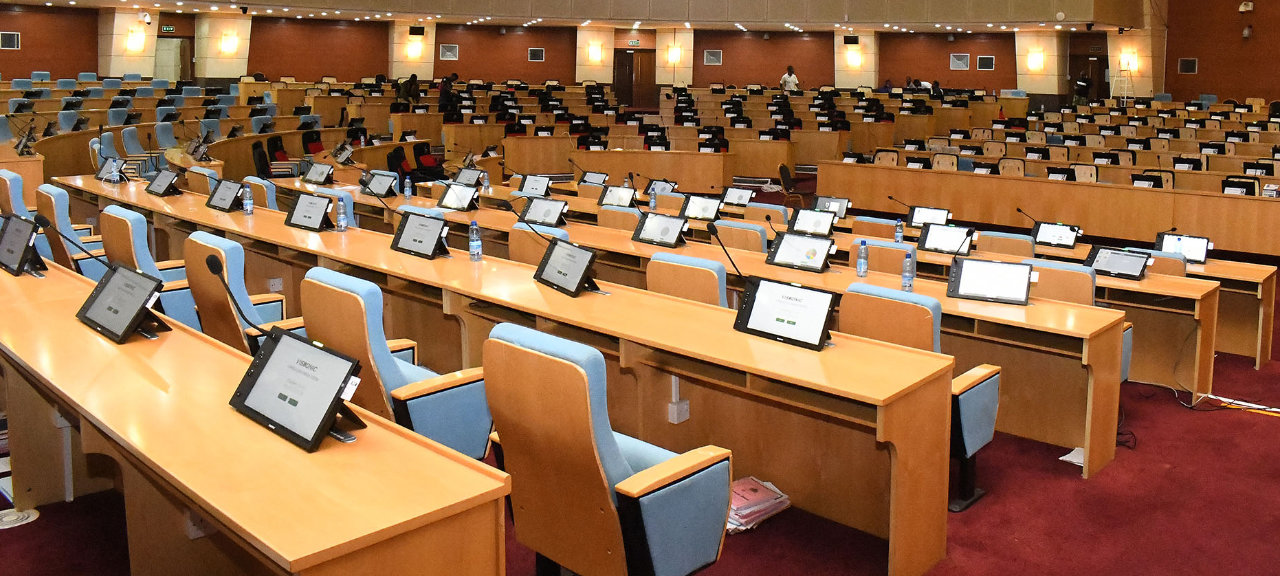
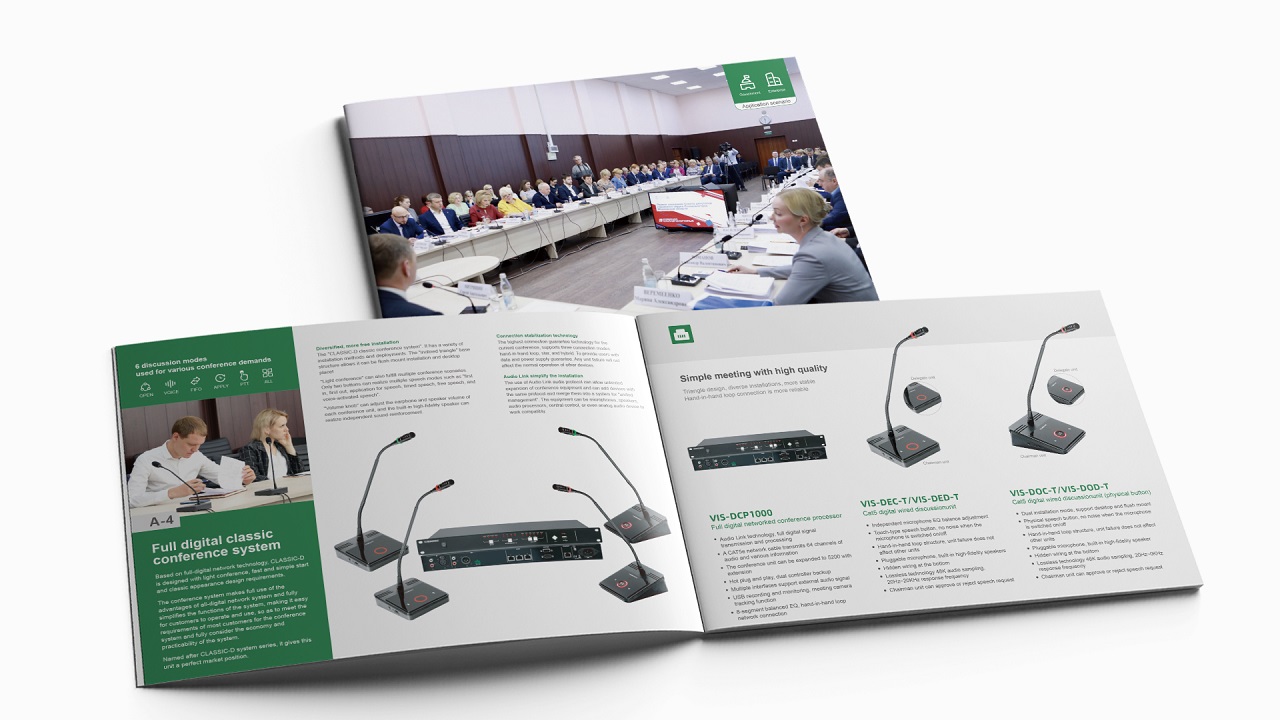
Built on the Full Digital Network DSP Conference Series multimedia touch-screen units and configured in dual-delegate mode, the system solves the vote-compression problem when delegates outnumber seats, and upgrades voting from a manual procedure into a recorded, auditable electronic process.
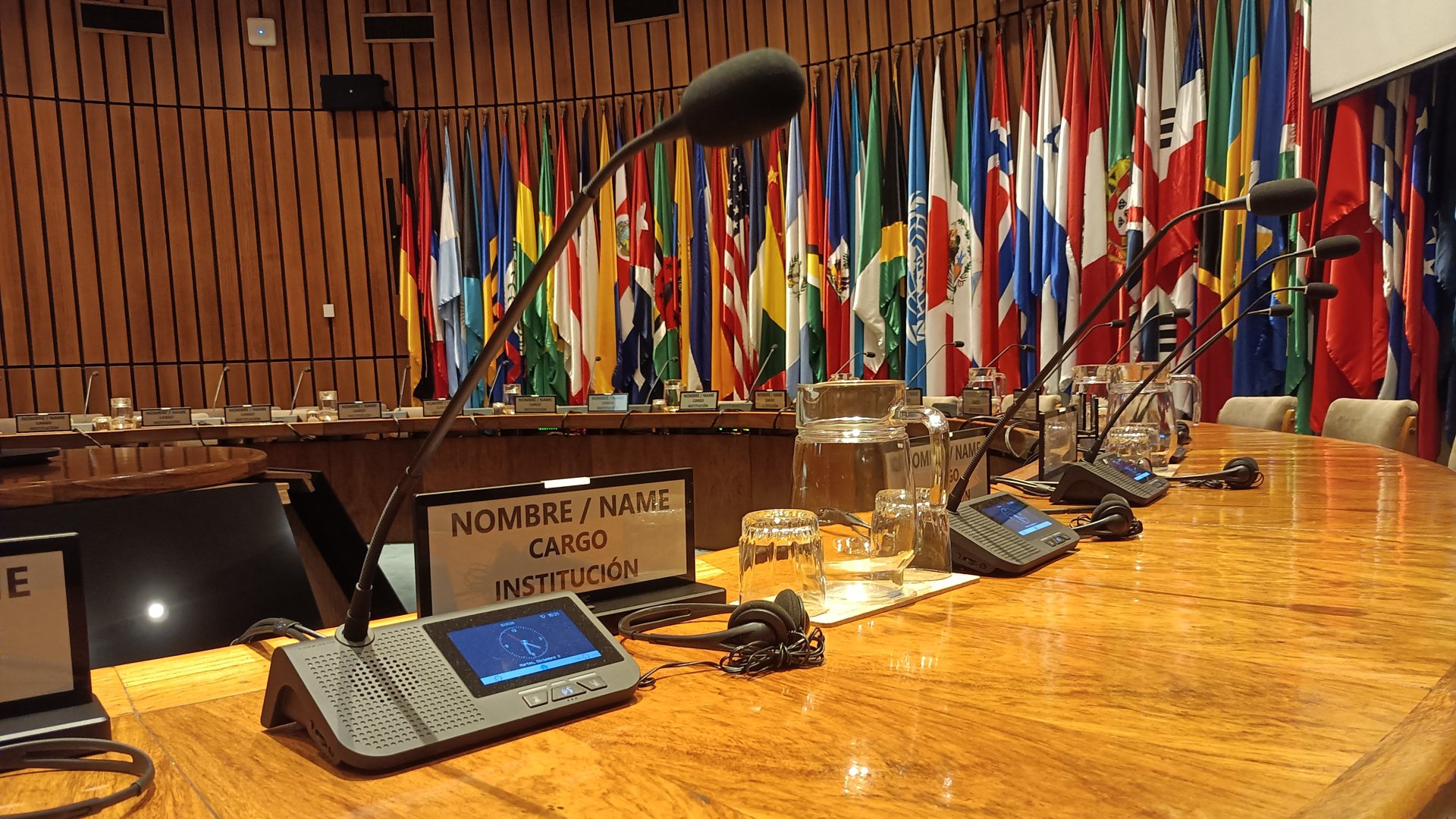
· Dual-delegate mode: one conference unit serves two delegates, each able to sign in and vote independently with their own credentials; the system counts ballots by delegate identity, not by device, with anonymous counting also available. No extra seats are needed, and no vote is sacrificed.
· Voting: initiated by the chair on the touch screen, with all delegates responding simultaneously; results are aggregated in real time and displayed on every unit's screen and the management console, compressing what used to be ten-plus minutes of manual counting into seconds.
· Speaking management: request-to-speak queues, countdown timers, chair priority, and interruption control make speaking allocation procedural rather than dependent on the moderator's on-the-spot judgment.
The dual-delegate mode also raises two knock-on issues for simultaneous interpretation and camera tracking — both solved by the same conference unit:
· Two delegates, two languages. Each side of the unit has its own headphone jack, so two delegates sharing a seat can each select a different language channel.
· Who should the camera follow? Pressing the microphone triggers the camera preset assigned to that seat, putting the shot precisely on the speaker. In dual-delegate mode, two presets are in effect, so whoever speaks gets the shot, unaffected by people moving around or venue noise.
3. Supporting Systems
Simultaneous interpretation: a Digital IR Language Distribution System runs multiple language channels in parallel to meet multilingual needs. Infrared transmission does not penetrate walls or leave the room, providing physical-layer confidentiality that meets the institution's requirements for classified meetings.
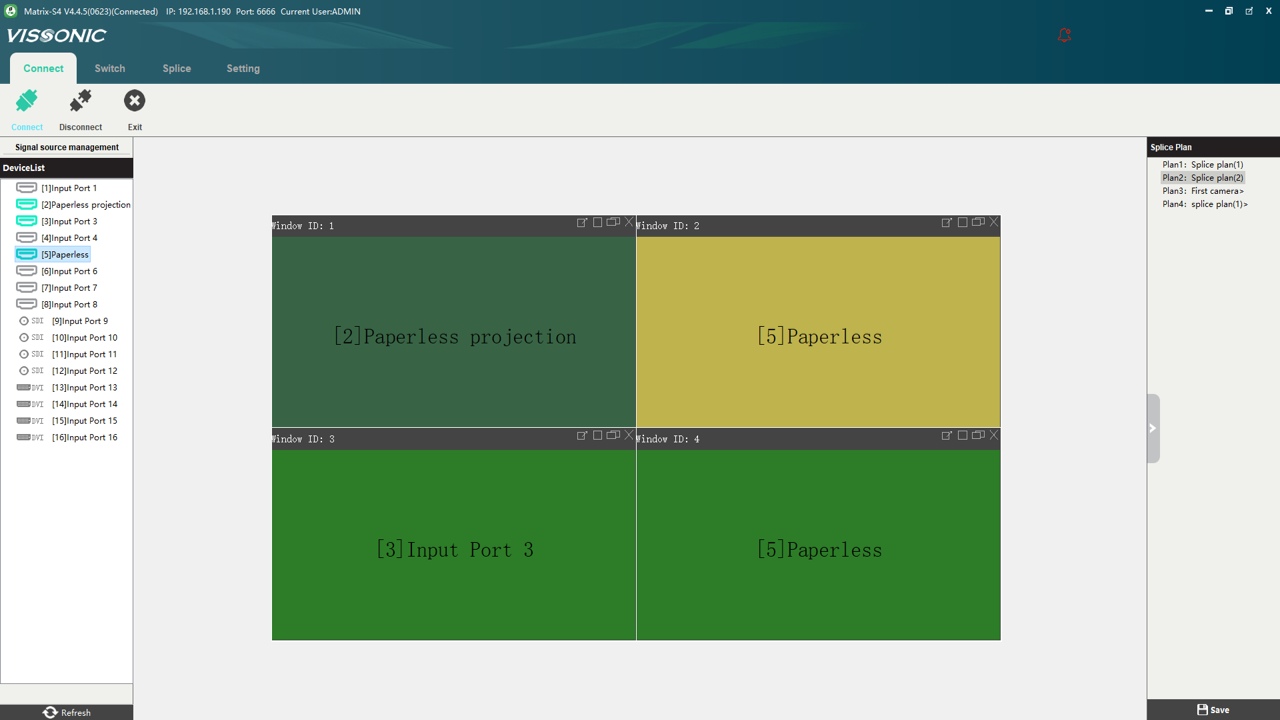
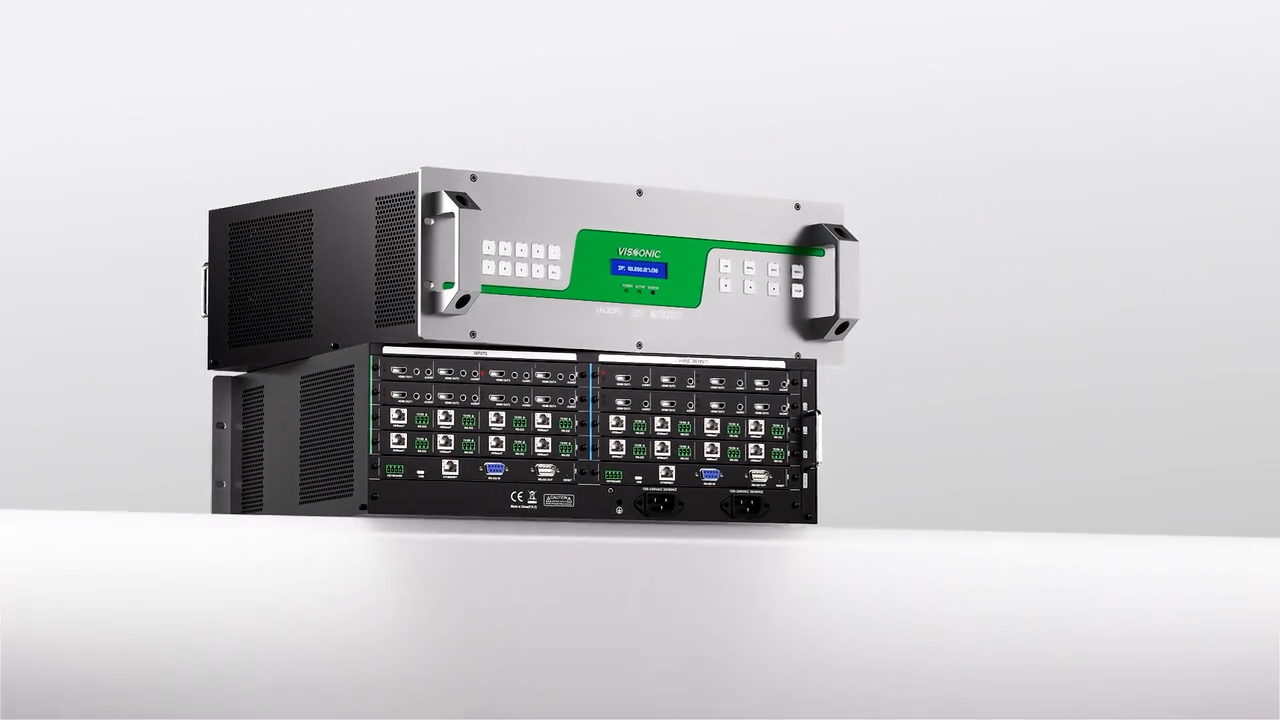
Camera tracking: a full-HD camera tracking system brings multiple camera feeds, PC signals, and playback sources into a unified switcher, with no black frames, jitter, or dropped frames when switching. Split-screen output serves the on-site big screen, remote participants, and recording archives alike.
Project Value
This conference system integrates speaking, voting, simultaneous interpretation, and camera tracking. For efficiency and procedure, dual-delegate mode gives co-seated delegates each their own vote with no extra devices or cabling, and electronic voting cuts ballot time from ten-plus minutes to seconds, fully logged, traceable, and auditable. For green operation, electronic nameplates allow the delegate list to be updated centrally from the back end, sharply cutting pre-meeting preparation and paper waste, in line with the institution's commitment to efficient, eco-friendly meetings.
Looking ahead, thanks to its integration capability and scalability, the system can take on new functions as needed without replacing hardware.
For a large international institution with this meeting intensity, what VISSONIC delivered is more than an equipment refresh: it is an upgrade in how meetings are organized.