





VISSONIC Offline AI Speech-to-Text Solution
VISSONIC introduces an offline AI speech-to-text transcription solution for professional meetings requiring high standards, strict data privacy and seamless integration.
Overview
Demand for speech-to-text in professional conferencing continues to grow. Existing solutions mostly rely on cloud-based transcription, standalone local software or manual note-taking, and commonly suffer from a wide range of challenges.
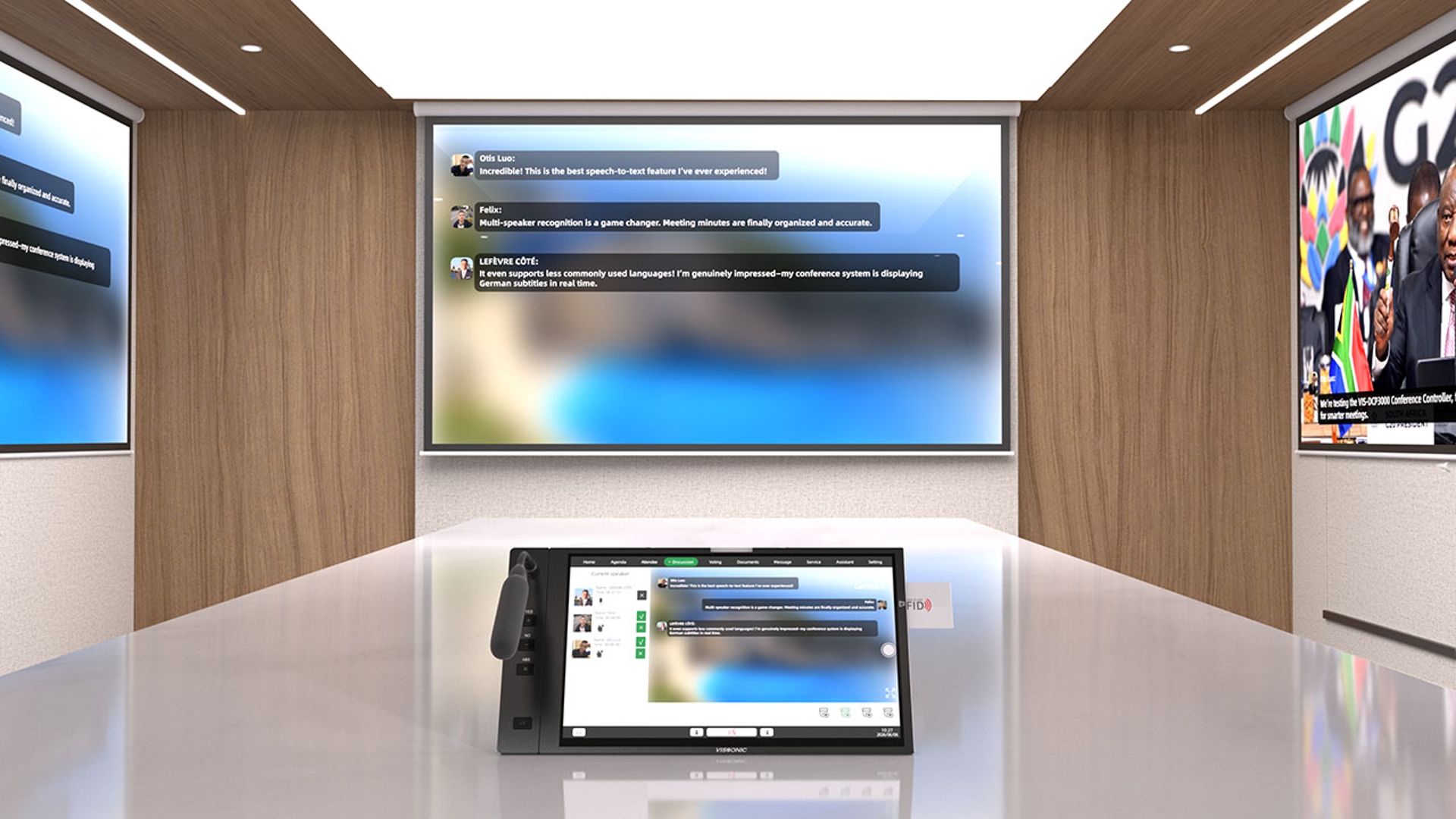
Challenges
Traditional speech-to-text approaches run into a number of obstacles in professional conferencing environments, holding back the digitalization and standardization of meetings:
1. Data-security risk: Cloud transcription uploads audio to off-site servers. For classified or government-sensitive meetings, that creates a leakage risk.
2. Low accuracy and poor traceability: Most solutions lack professional speaker identification. In multi-talker conversations, speakers can’t be separated and text can’t be mapped to the right voice, leaving records disorganized and hard to trace.
3. Unstable operation: Cloud solutions depend heavily on the network. Fluctuations or outages cause stuttering or dropped transcription.
4. No on-site hardware integration: Most offerings are pure software with no dedicated caption-output hardware, so they can’t feed live captions straight to large-format displays or projectors.
5. Weak multi-venue concurrency: Traditional setups handle one meeting at a time. Multi-room deployments mean duplicating equipment, driving up both project cost and operational overhead.
6. Limited archiving: They export plain text only—no layered recording, no time-stamped structured records, no post-meeting batch distribution.
Solution
To tackle these challenges, VISSONIC delivers a fully local, offline, privately deployed, hardware-software integrated AI speech-to-text system.
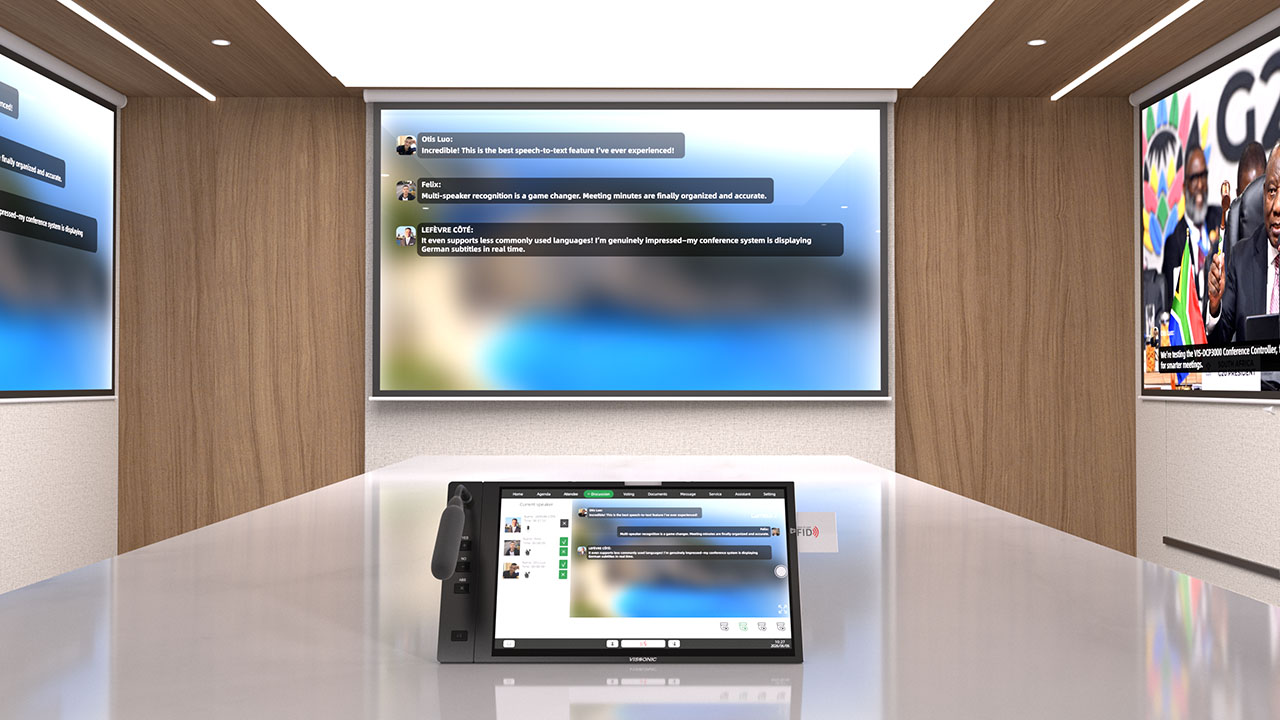
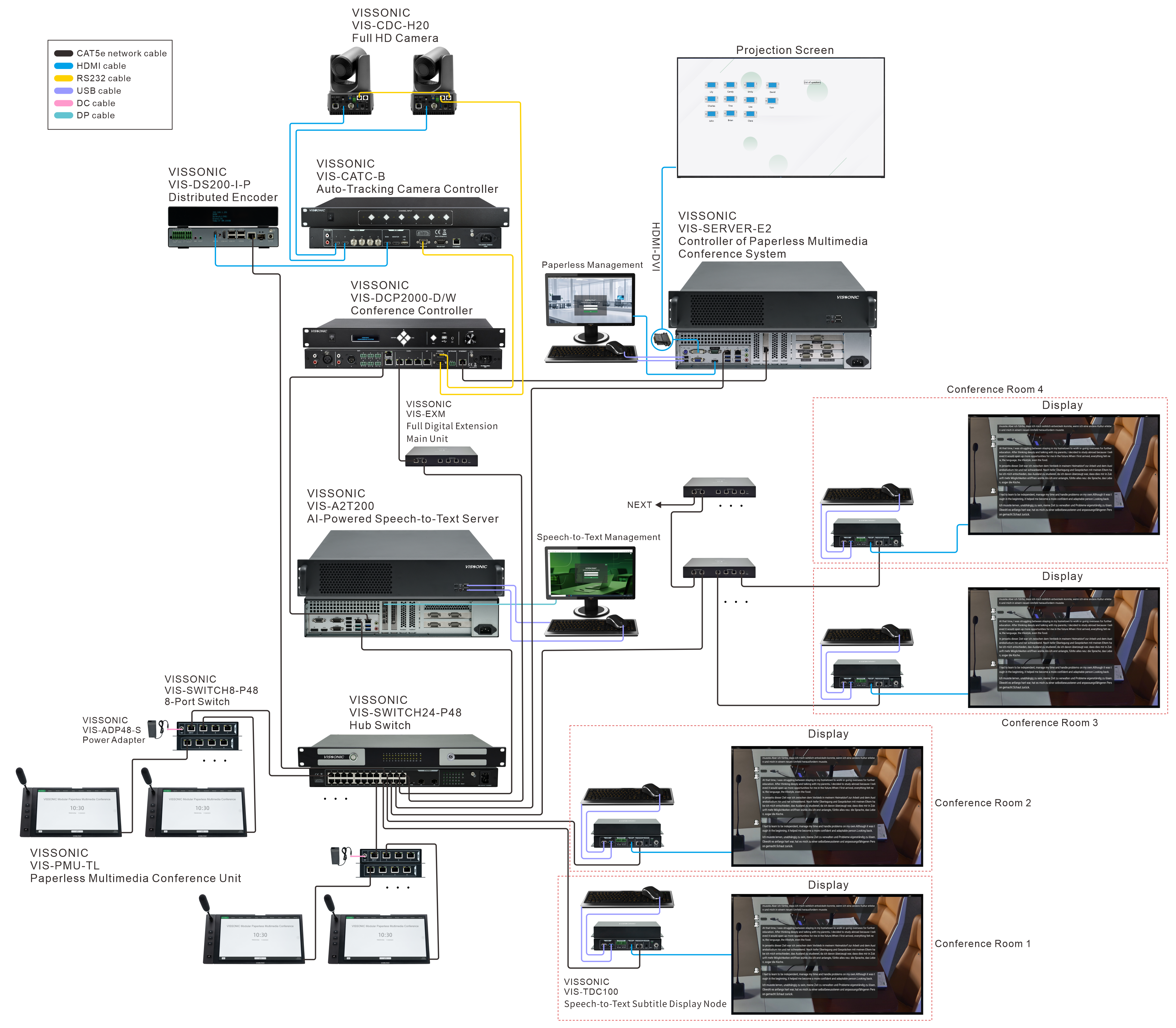
Equipped with a speech-to-text server and distributed caption-display nodes, it covers the full chain—audio capture, AI transcription, live captioning, meeting management, hierarchical archiving, and post-meeting distribution.
1. AI Speech-to-Text Server: VIS-A2T200
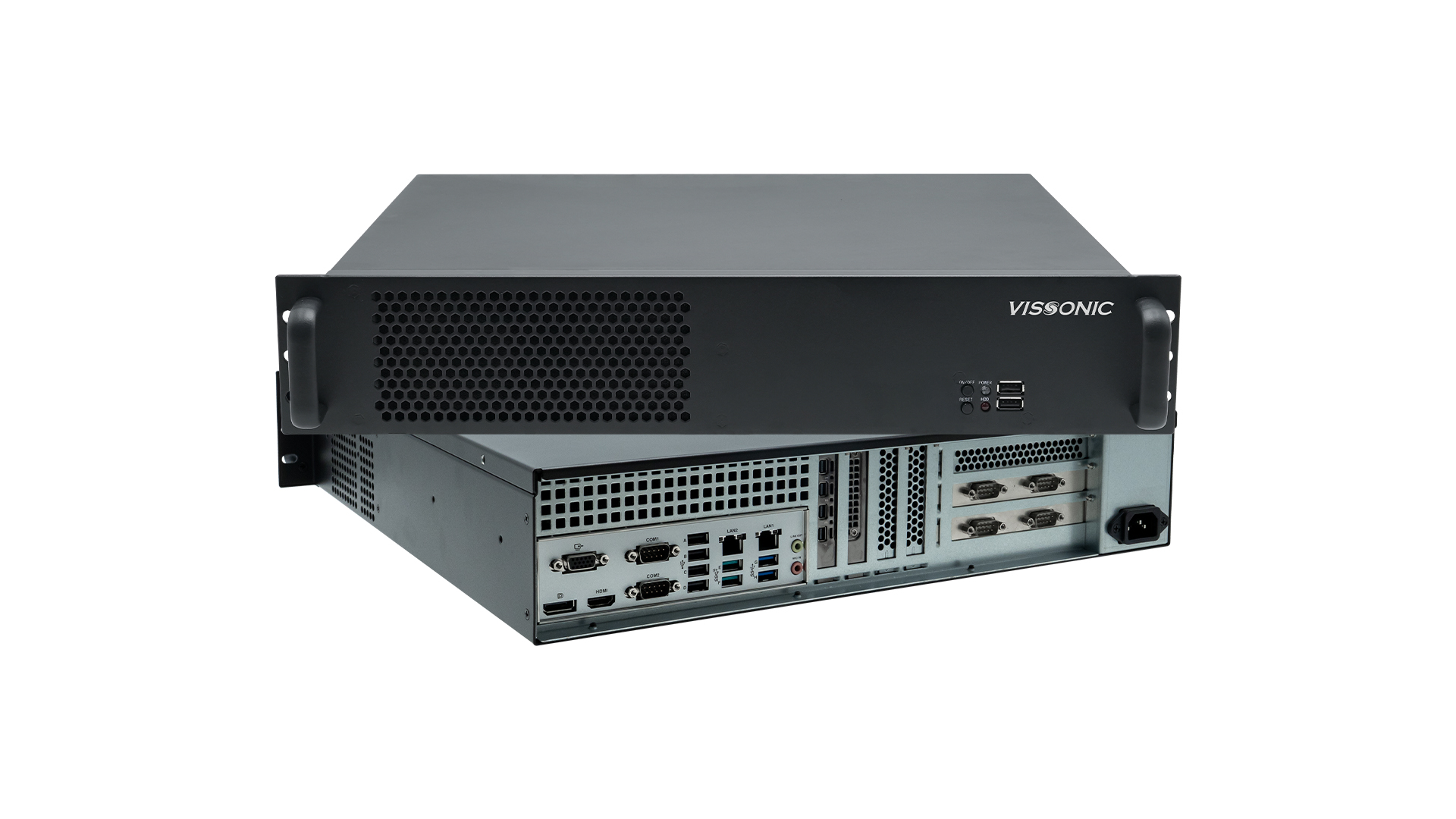
· Parallel multi-venue transcription — one unit drives independent, simultaneous transcription across up to 5 meeting rooms, fitting large-scale multi-venue rollouts.

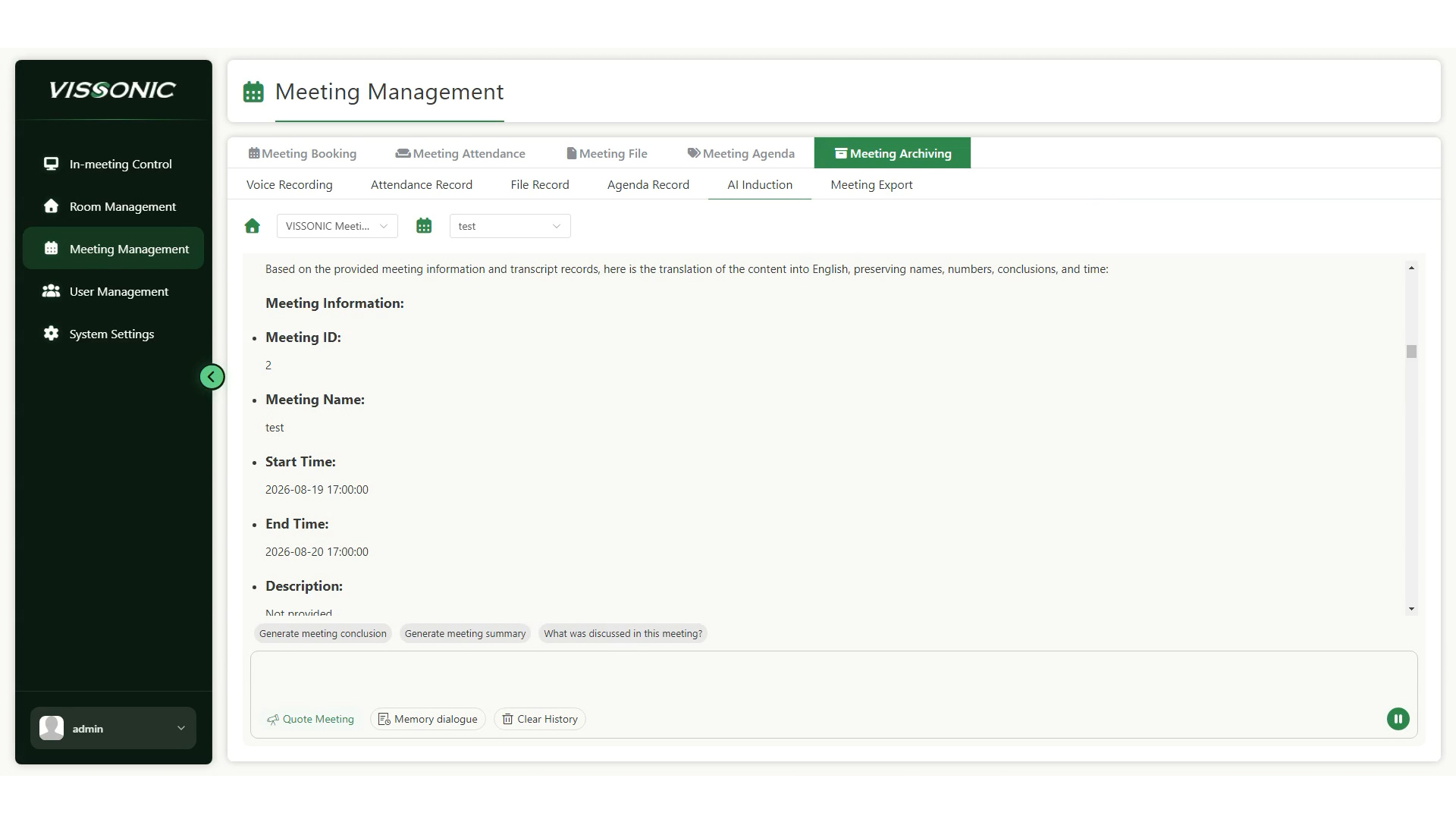
· Deep conferencing-system integration — connects natively with the VISSONIC conferencing system for meeting scheduling, permission control, centralized microphone management, and content presentation, giving end-to-end control of the meeting workflow.
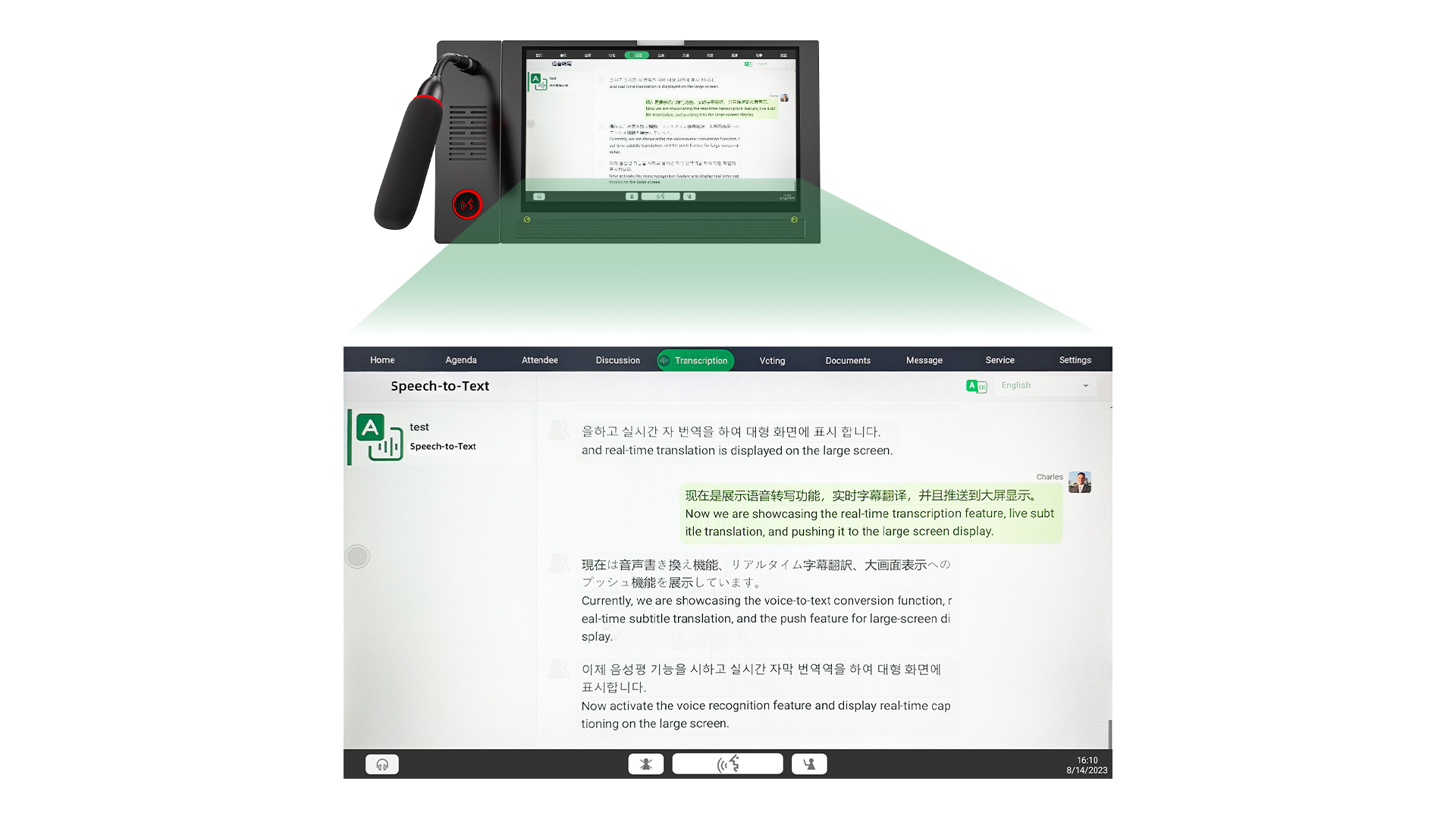
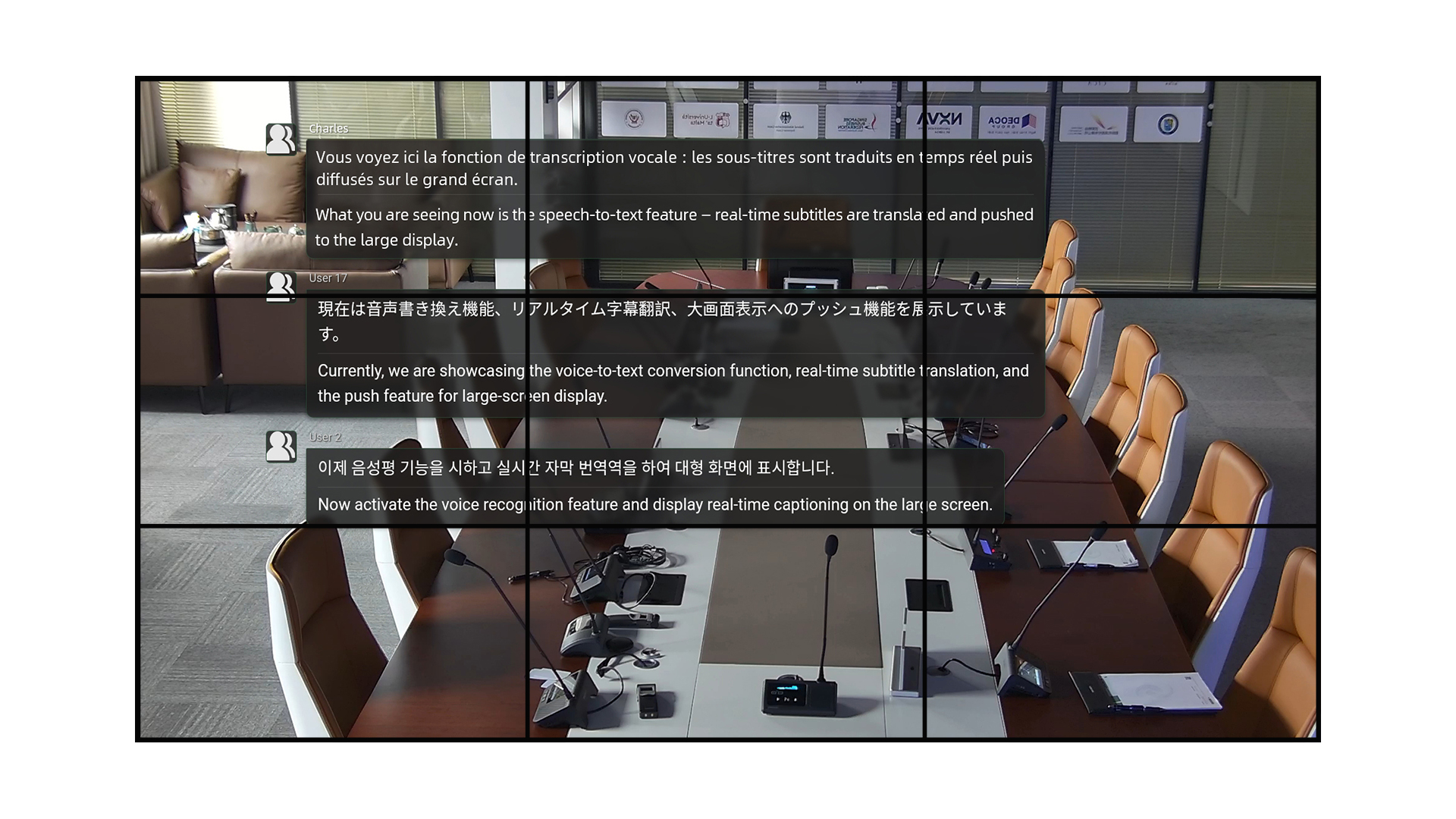
· Multilingual real-time caption translation — live translation among Chinese, English, French, Russian, Spanish, and Arabic, pushed to displays with up to 95% accuracy.
· Hardware-level speaker identification — built on hardware acceleration and voiceprint recognition to accurately separate and label different speakers in multi-talker scenarios.
· Multi-tier archiving and quick export — multi-tier audio archiving plus time-stamped structured records, with one-click export of the full meeting package via QR code.
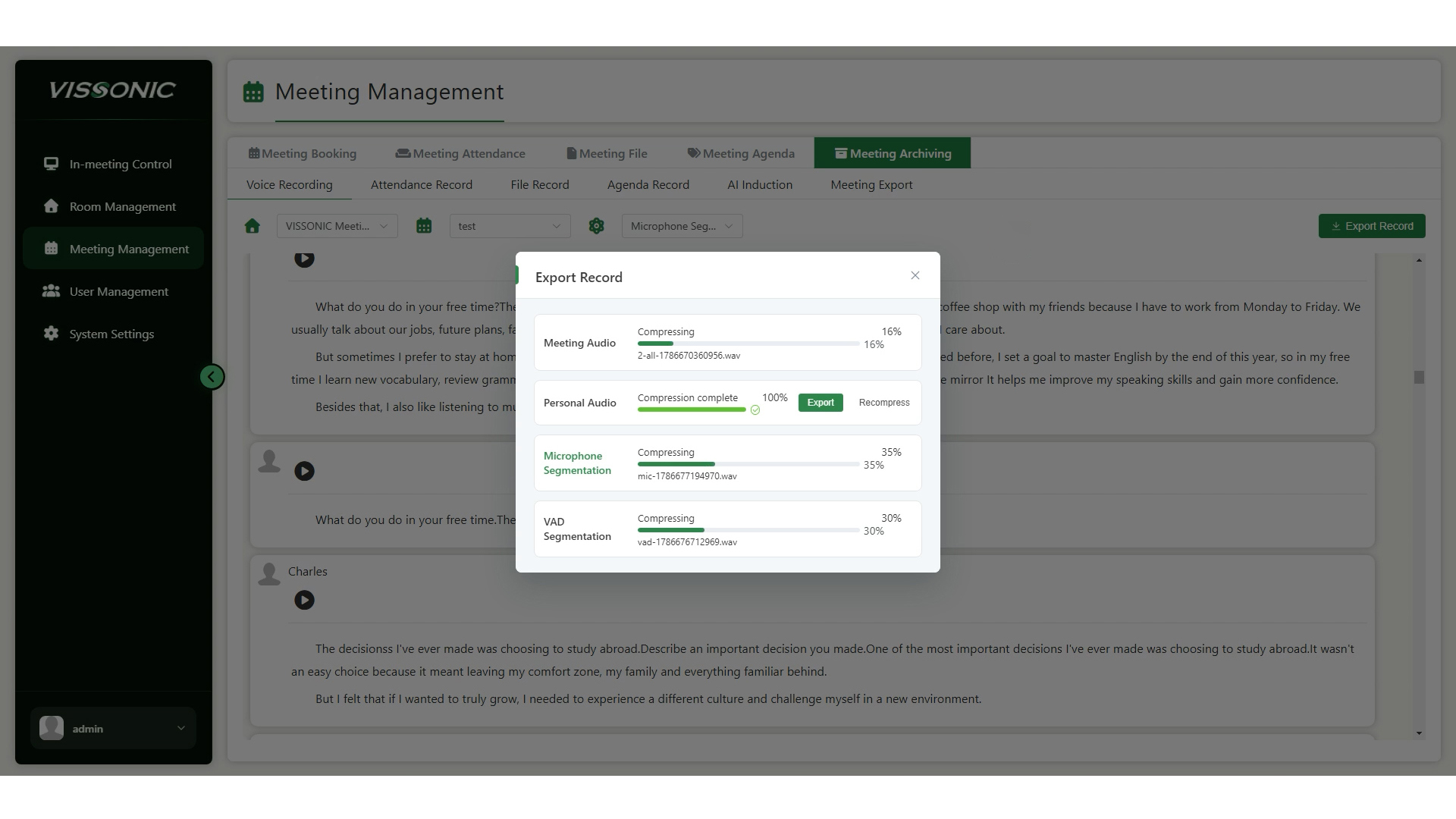
· Advanced AI processing — AI-powered meeting summarization and Q&A for intelligent handling of large-scale meetings.
· Hardware specifications — 16 GB RAM, multi-channel 4K signal output, and compatibility with tablets, iOS, Android, macOS, and the Kylin OS.
2. Caption Output Node: VIS-TDC100
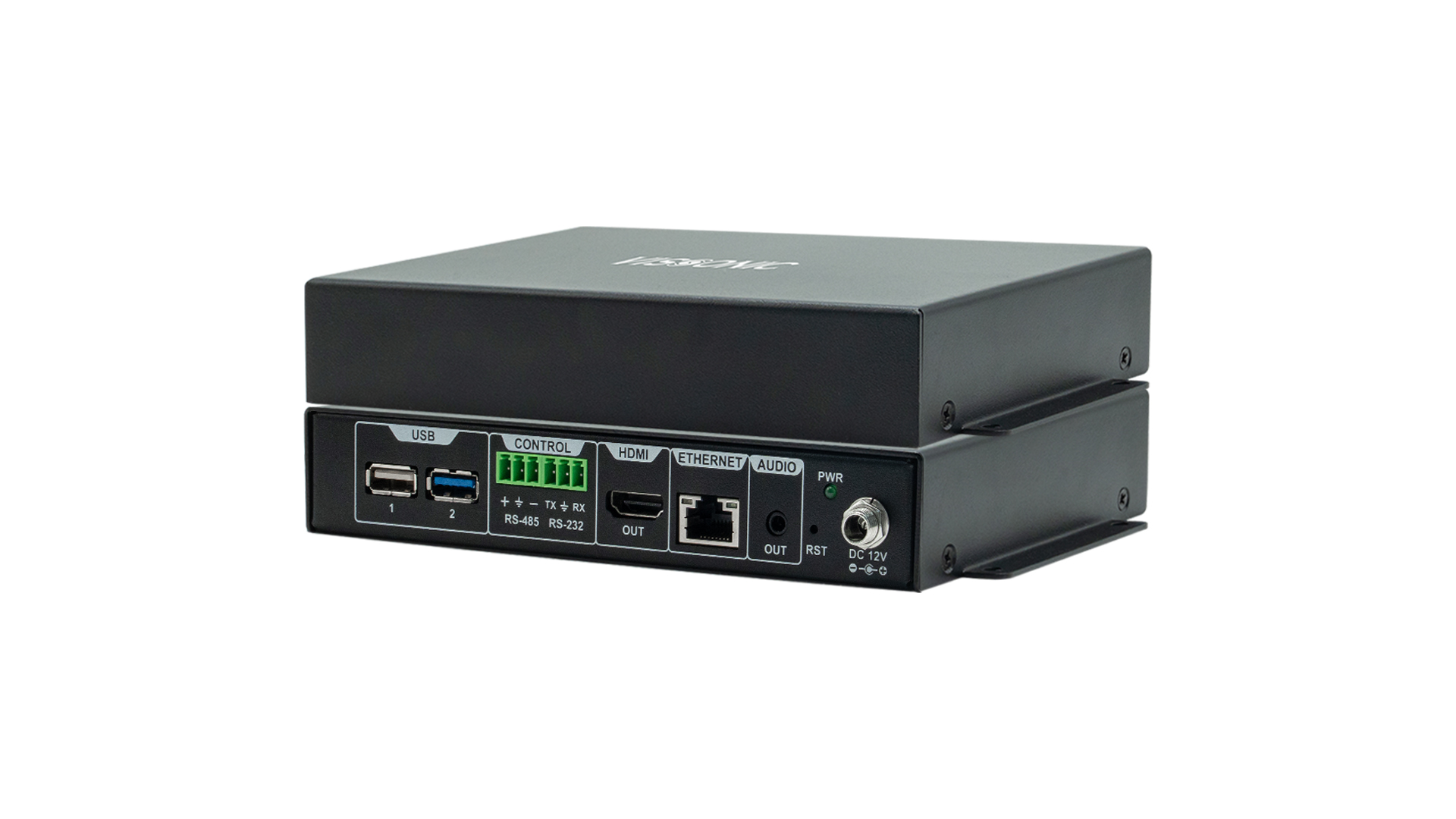
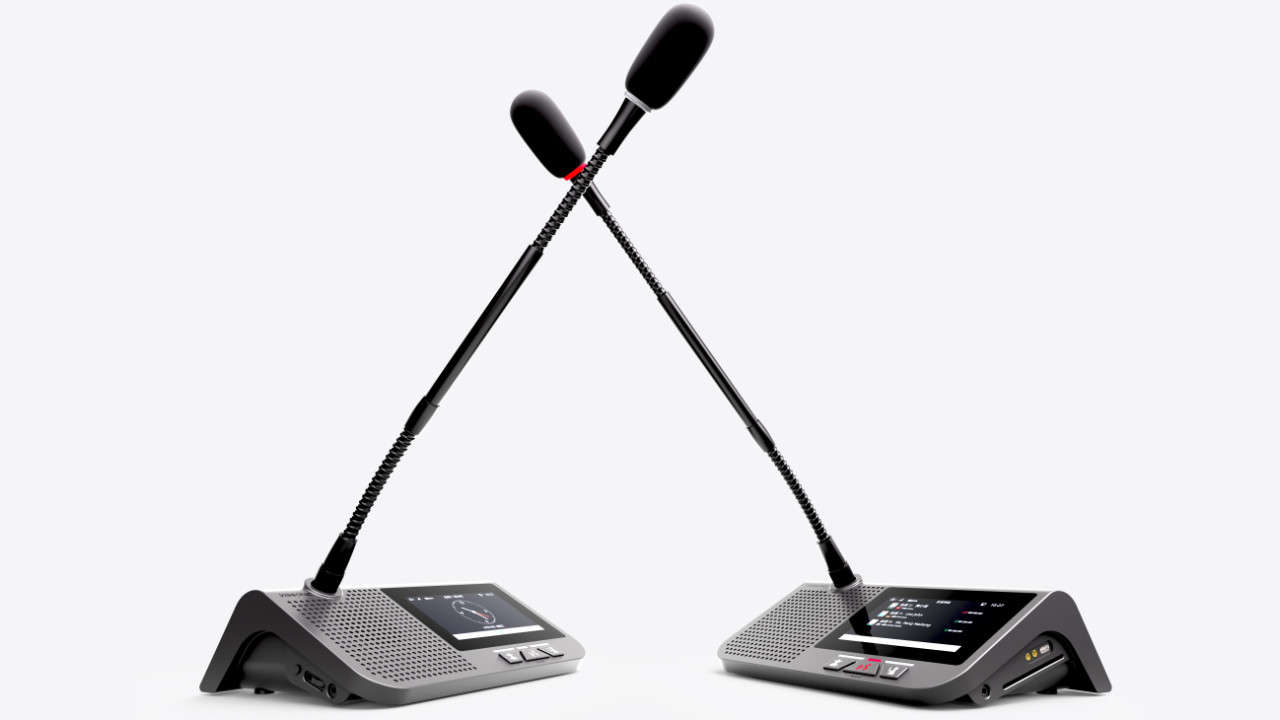
The VIS-TDC100 is a dedicated companion terminal that works with the server to handle caption display output. It connects directly to large-format displays and projectors, deploys quickly over a LAN, and switches captions between rooms with ease. It also links with camera auto-tracking systems, putting the speaker’s video and the transcribed captions on screen together.
Comparison
Approach | Core Strengths | Core Limitations |
Manual stenography | Highly readable output | High cost, low efficiency; No real-time on-screen display; Hard to archive |
Cloud SaaS transcription | Easy to deploy; Broad language coverage | External-network dependency; Data-leakage risk; No hardware linkage |
Generic local transcription software | Local processing; No network dependency | Limited compute; No multi-venue concurrency; No caption hardware |
VISSONIC Offline AI Solution | Local offline operation; Multi-venue concurrency; Hardware-software integration; Deep VISSONIC system integration | Hardware-based deployment; Aimed at professional conferencing; Not build for lightweight personal office use |
Application Scenarios
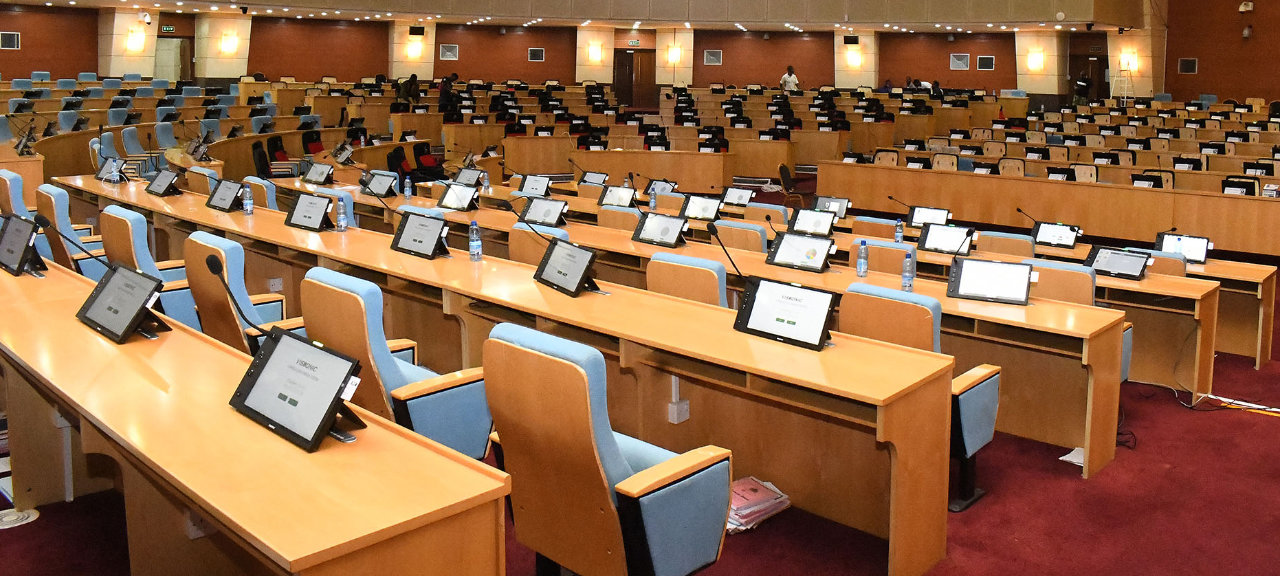
Designed for professional conferencing, the solution fits meeting rooms, command centers, courtrooms, military command, education and research, government briefing halls, and similar environments.
Summary
VISSONIC’s offline AI speech-to-text system solves security, deployment, concurrency and archiving challenges. Fully local private deployment guarantees data compliance. Hardware-powered transcription, speaker ID and multi-venue support cut costs, delivering an end-to-end workflow for live transcription, captioning and meeting record storage.